What makes it special
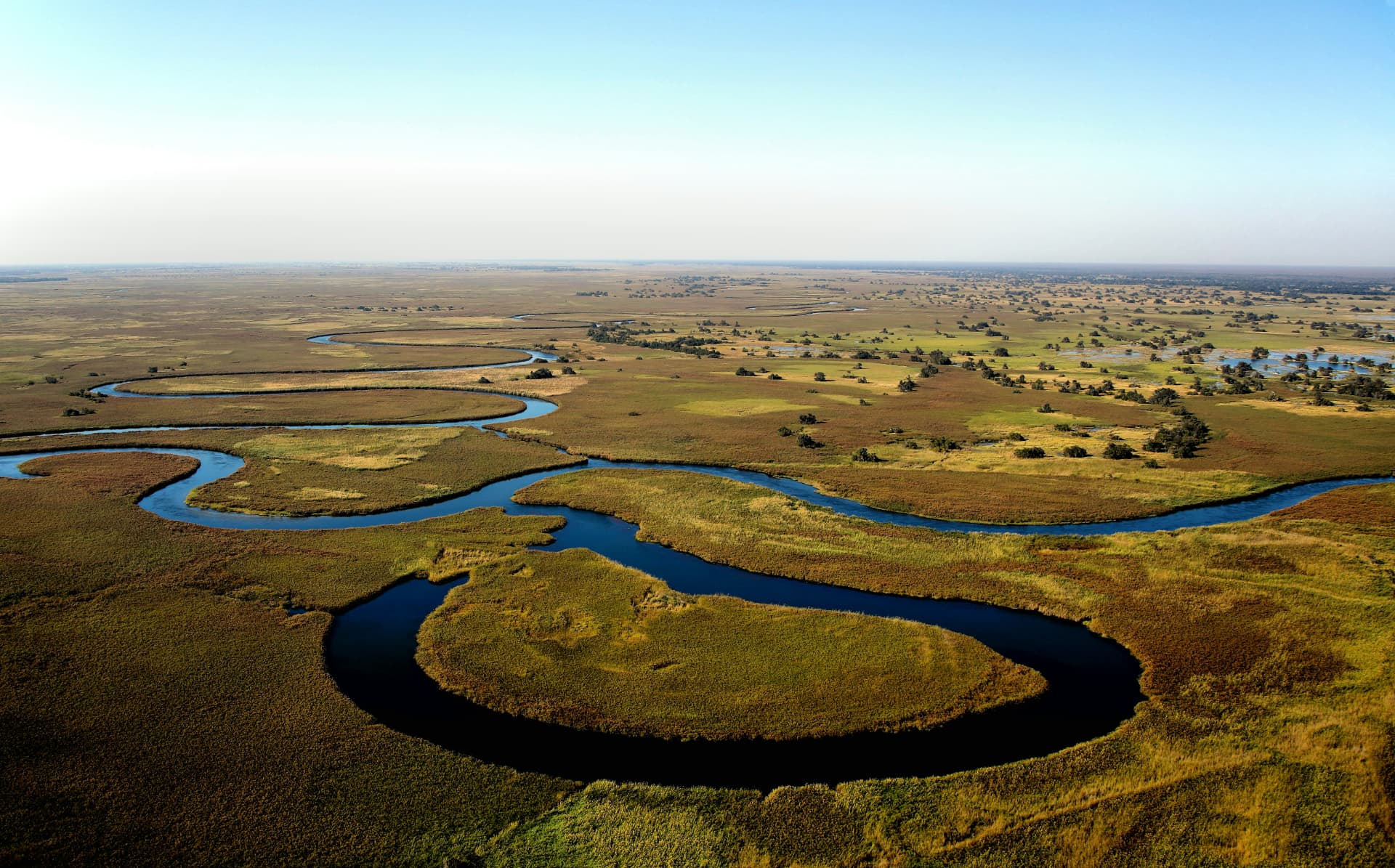
The Okavango does what almost no great river does: it never reaches the sea. It rises in the highlands of central Angola, runs some 1,600 kilometres south-east across the Caprivi, crosses into Botswana and stops, spilling onto a tectonic trough in the northern Kalahari and fanning into channels, lagoons and palm islands. Around 6,000 square kilometres is permanent swamp; at full flood it swells to roughly 15,000. Some 11 cubic kilometres of water arrive each year and virtually all of it evaporates.
Read the full story →Travel Advice & Access
Light aircraft. Nearly every camp is reached by charter or seat-in-plane from Maun or Kasane in a Cessna 206 or 208, landing on a graded strip and continuing by 4x4 or boat. The rule is 20 kilograms per person including hand luggage, in a soft bag with no wheels or rigid frame, typically no larger than 65 by 40 by 30 centimetres. Hard cases are refused at the aircraft, so this belongs in bold in the client documents. Payload is calculated on declared passenger weights: anyone over 100 kilograms must be declared in advance and may need a paid extra seat.
Read the full story →When to Go
July to September — peak dry season, peak flood, peak rates. The paradox in three months: the Delta is at its fullest while the surrounding country has had no rain since March. Surface water elsewhere has gone, the bush has thinned, and game concentrates on the floodplains and perennial rivers in numbers that are hard to overstate. Wild dog denning runs June to August on the Linyanti concessions. Days warm from the mid-twenties in July to the high twenties in September, and mosquitoes are at their annual low.
Read the full story →